Nusa Penida manta snorkelling: the trip and the swim code
Snorkelling with manta rays at Nusa Penida: FirstBali's half-day private trip from Benoa, what the research says about the mantas, and the Manta Trust's code for swimming with them.
Updated October 21, 2026 · 4 min read
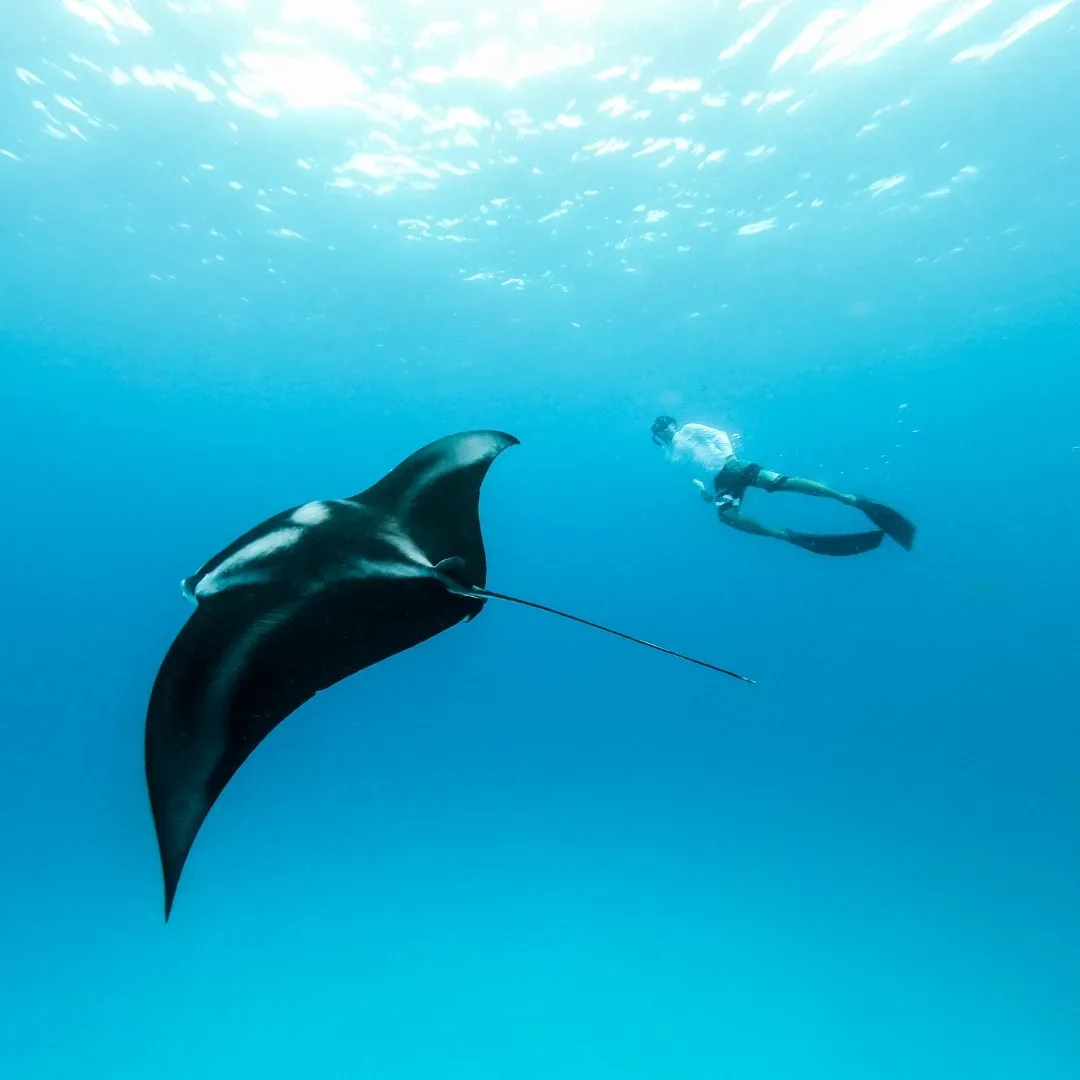
Snorkelling with manta rays at Nusa Penida is a half-day boat trip from Bali to the reefs where reef mantas come in, seen with a mask and fins. FirstBali arranges it as Manta rays, Nusa Penida — half a day snorkelling where they pass — through the concierge. The operator confirms the date and the amount, the sea decides on the day, and wild animals are never guaranteed.
The trip
Boats leave from Benoa, cross to Nusa Penida, the island south-east of Bali, and stop where the mantas are being seen. You snorkel from the boat with the guide, then head back. It suits a morning or an afternoon in a week otherwise spent on land, and it is the shortest of the Nusa Penida trips in the catalogue.
If half a day is not enough:
- Private yacht — full-day island hopping — Manta Point, Crystal Bay and snorkelling, with crew, guide and gear; see Nusa Penida private boat trip.
- Nusa Penida, full day — the crossing, then the island on foot.
Bali boat party lists every charter.
The mantas of Nusa Penida
The rays here are reef manta rays (Mobula alfredi). A peer-reviewed study by Germanov and colleagues, published in Frontiers in Marine Science, followed them for years through photo-identification at two sites:
- Manta Bay is a foraging ground, used mainly by immature rays.
- Manta Point is an important site for adult social and reproductive activity.
The study found that reproductive behaviour coincided with the peak in annual sightings, in May. It also notes that all fishing is officially prohibited at both sites — but that the number of boats entering manta habitat is unregulated, and that codes of conduct for manta encounters are voluntary and not strictly enforced. In other words, how each swimmer behaves is what protects the encounter.
The Manta Trust's swim code
The Manta Trust, the manta conservation charity, publishes a ten-step guide for swimming with mantas. For snorkellers:
- Enter the water quietly and calmly, well away from the manta.
- Keep your fins below the surface. Splashing and noise can scare mantas away.
- Do not approach. Stay still and let the manta come to you.
- Stay to its side, leaving the manta a clear path ahead.
- Do not chase a manta as it swims past.
- Do not touch a manta. It can ruin the encounter, and may lead to a fine under local laws.
For scuba divers, the code adds: stay at the side of the cleaning station rather than on it, keep low without damaging the reef, and never block a manta's path as it swims overhead. Last step, for everyone: follow any rules specific to the site you are visiting. The guide on board will tell you what they are.
Safety in the water
The UK government's travel advice for Indonesia warns that sea conditions can change rapidly and asks travellers to check that life jackets are available before sailing. Children's life jackets are not always available, so bring your own for small children.
On the reef, a few habits help:
- Tell the guide early if anyone is a weak swimmer.
- Wear the life jacket or float the crew offers, if you are unsure.
- Stay with the group and get back on board when the guide says.
- In an emergency, the number is 112.
What to bring
- Reef-safe sunscreen, applied well before you swim, and a rash vest.
- A towel and a dry layer for the crossing back.
- Your own mask if you prefer one that fits.
- A dry bag for phones and passports.
- An underwater camera, flash off around the mantas.
When to go
The research above recorded the peak in annual sightings in May. More important is the day itself: the operator and the crew decide on conditions, and may move the trip. Keep a spare day in your plans if this is the one thing you want to do.
A day out, then a night out
A half-day trip leaves the rest of the day free. Back in Bali, the concierge can line up a sunset and a table: Savaya's Monday Last Light on the Uluwatu clifftop, or a beach club in the south.


Le Bleu
Beach clubs · Nusa Dua
Le Bleu by K Club is a beachfront restaurant and beach club on Nusa Dua Beach, in the ITDC resort area, run by the K-Club Group. The look is French Riviera by way of Bali, all blue and white, with sunbeds, cabanas, terraces and an indoor dining room. The kitchen leans on seafood, from lobster linguine to yellowfin tuna tataki, with vegetarian and vegan options. The weekly programme mixes yoga, cocktail workshops, beach games and festive Sunday gatherings with a DJ.
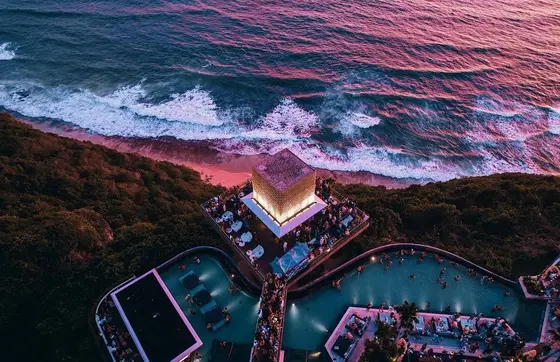

Savaya Bali
Clubs · Uluwatu
Savaya is a clifftop club in Pecatu, Uluwatu, set 100 metres above the Indian Ocean between jungle and limestone cliffs, with pools and The Cube, the landmark that frames its horizon. Named the number-one club in Asia three years running (2024–2026) and fifth in the world in 2026 in DJ Mag's Top 100 Clubs, it is open daily: Last Light every Monday, weekday nights, and international headliners at weekends. Strictly 21+, smart casual.
How to ask for it
Send the concierge your date and a second choice, the number of people, adults and children, how confident each person is in the water, and where you are staying for the transfer to Benoa. The operator confirms availability and the amount; any deposit follows the operator's terms and is not a confirmation. An assistant answers at any hour, and the team through the Bali day and evening.
Read next
Questions we get asked
+Can you snorkel with manta rays at Nusa Penida?
Yes. FirstBali arranges a half-day private trip from Benoa, snorkelling where the reef mantas pass. The operator confirms the date and the amount; sightings are never guaranteed.
+What kind of manta rays live at Nusa Penida?
Reef manta rays (Mobula alfredi). Research published in Frontiers in Marine Science found Manta Bay used mainly for feeding by young rays and Manta Point for adult social and reproductive activity.
+Can I touch a manta ray?
No. The Manta Trust's code says never touch a manta: it can ruin the encounter and may lead to a fine under local laws.
+When is the best time to see mantas at Nusa Penida?
The Frontiers study recorded the peak in annual sightings in May. The conditions on the day matter most.
+Do I need to be a strong swimmer?
Tell the guide early if anyone is a weak swimmer, and wear the life jacket or float the crew offers if you are unsure.
+Is there a longer manta trip?
Yes: the full-day private yacht to Nusa Penida takes in Manta Point, Crystal Bay and snorkelling, with crew, guide and gear included.
Want us to arrange it?
Tell the concierge what you have in mind — a table, a guestlist, a villa, a driver. The assistant answers at any hour; the team takes over from 9am to midnight Bali time.
Ask the concierge